Spaghetti Squash is one of the most unique and recognizable winter squash varieties in cultivation, prized for its remarkable flesh that transforms into tender noodle-like strands when cooked. Originating from Central America, this unusual cucurbit carries a long and fascinating history, eventually spreading across continents through centuries of cultivation, trade, and agricultural exchange. Historical records suggest early forms of vegetable spaghetti squash were cultivated by 19th-century Manchurian farmers, with modern seed lines later gaining wider distribution through the Sakata Seed Company during the early 20th century. By 1936, spaghetti squash had entered American seed catalogs through the Burpee Seed Company, steadily growing in popularity through the Victory Garden era and eventually becoming a household staple by the late 20th century.
Known for its smooth creamy-yellow exterior, Spaghetti Squash typically produces oblong fruits reaching up to 10 inches in length and weighing as much as 5 pounds under favorable conditions. Beneath its sturdy outer rind lies one of the most distinctive traits in the vegetable world—once cooked, the flesh naturally separates into long, tender strands resembling spaghetti or pasta. The Spaghetti Squash line offered here is maintained through open-pollinated seasonal seed saving. As with many garden lines preserved through continued open-pollinated reproduction, slight natural variation in plant vigor, fruit size, or shape may occasionally occur from plant to plant. Its mild flavor and unique texture have made spaghetti squash a longtime favorite for gardeners and cooks seeking a wholesome alternative to traditional pasta, while its versatility allows it to shine in casseroles, baked dishes, roasted preparations, and countless creative recipes. Combining historical charm, distinctive culinary appeal, and dependable garden performance, Spaghetti Squash remains one of the most conversation-worthy and versatile squash varieties available for home gardeners today.
Spaghetti Squash is one of the most unique and recognizable winter squash varieties in cultivation, prized for its remarkable flesh that transforms into tender noodle-like strands when cooked. Originating from Central America, this unusual cucurbit carries a long and fascinating history, eventually spreading across continents through centuries of cultivation, trade, and agricultural exchange. Historical records suggest early forms of vegetable spaghetti squash were cultivated by 19th-century Manchurian farmers, with modern seed lines later gaining wider distribution through the Sakata Seed Company during the early 20th century. By 1936, spaghetti squash had entered American seed catalogs through the Burpee Seed Company, steadily growing in popularity through the Victory Garden era and eventually becoming a household staple by the late 20th century.
Known for its smooth creamy-yellow exterior, Spaghetti Squash typically produces oblong fruits reaching up to 10 inches in length and weighing as much as 5 pounds under favorable conditions. Beneath its sturdy outer rind lies one of the most distinctive traits in the vegetable world—once cooked, the flesh naturally separates into long, tender strands resembling spaghetti or pasta. The Spaghetti Squash line offered here is maintained through open-pollinated seasonal seed saving. As with many garden lines preserved through continued open-pollinated reproduction, slight natural variation in plant vigor, fruit size, or shape may occasionally occur from plant to plant. Its mild flavor and unique texture have made spaghetti squash a longtime favorite for gardeners and cooks seeking a wholesome alternative to traditional pasta, while its versatility allows it to shine in casseroles, baked dishes, roasted preparations, and countless creative recipes. Combining historical charm, distinctive culinary appeal, and dependable garden performance, Spaghetti Squash remains one of the most conversation-worthy and versatile squash varieties available for home gardeners today.

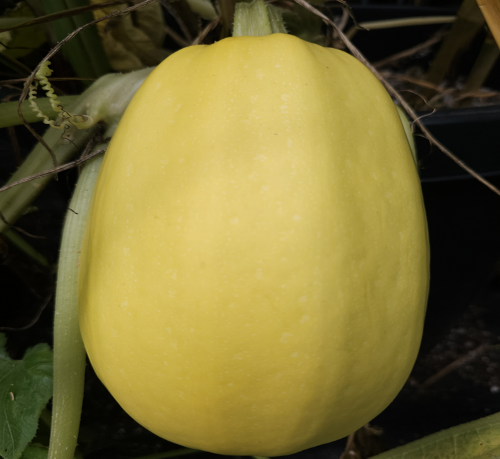 Image 1 of 17
 Image 2 of 17
 Image 3 of 17
 Image 4 of 17
 Image 5 of 17
 Image 6 of 17
 Image 7 of 17
 Image 8 of 17
 Image 9 of 17
 Image 10 of 17
 Image 11 of 17
 Image 12 of 17
 Image 13 of 17
 Image 14 of 17
 Image 15 of 17
 Image 16 of 17
 Image 17 of 17