
Pepper Seed Isolation
&
Cross-Pollination
Explained
Cultivating MONSTERS

growing in isolation to reduce cross-pollination and improve seed consistency.
Growers use isolation methods to prevent cross pollination.
Pepper plants can easily cross pollinate, especially when multiple varieties are grown close together. This can lead to unpredictable results in the seeds produced. Outdoor isolation greatly reduces unwanted cross-pollination, but no practical field system can guarantee 100% seed purity. In outdoor growing, this level of control isn’t realistic. Instead, growers use isolation methods, such as netting, to reduce unwanted pollen transfer and improve seed consistency. Isolation methods help reduce the risk and improve consistency but no outdoor system can guarantee complete uniformity. Unintended cross pollination can lead to variation in plant traits, which is why careful control and understanding of the process are essential when cultivating peppers. Explore our isolated pepper seed collection →isolated pepper seeds Grown with love and care with the methods described.
🌶️ Pepper Seed FAQ:
Isolation, Cross-Pollination & True-to-Seed Explained
🌱 The Basics
-
Cross pollination occurs when pollen from one pepper plant fertilizes another, resulting in seeds that may carry traits from both parent plants.
-
Pepper seed isolation is the process of reducing unwanted cross-pollination-between-different pepper varieties. This is typically done using physical barriers such as netting, blossom bags, enclosed growing areas, or sufficient-distance- between -varieties-. Pepper plants are largely self-pollinating, but insects can still transfer pollen between different varieties grown in the same area.


🌱 Our Approach to Seed Quality
At Monster Peppers, we focus on improving consistency while still working within a natural growing environment.
Our approach includes
Selective cultivation
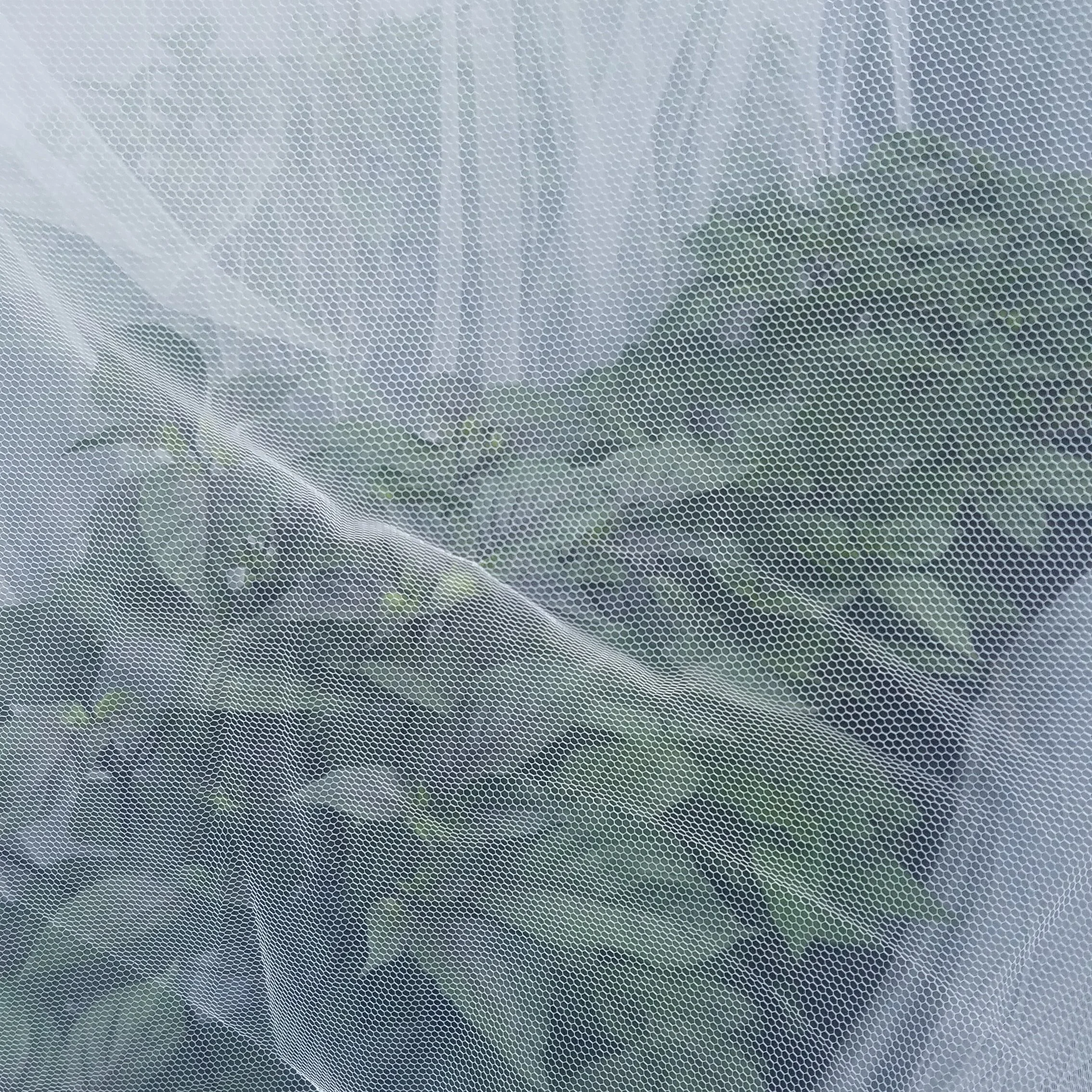
Physical isolation using netting
Hand-selecting seeds from plants with desirable traits
Growing lines over multiple seasons to observe performance
We don’t rely on a single grow cycle. We take the time to understand how a variety behaves across different conditions and generations.
This allows us to offer seeds with stronger trait consistency while still respecting the natural variation that comes with growing outdoors.
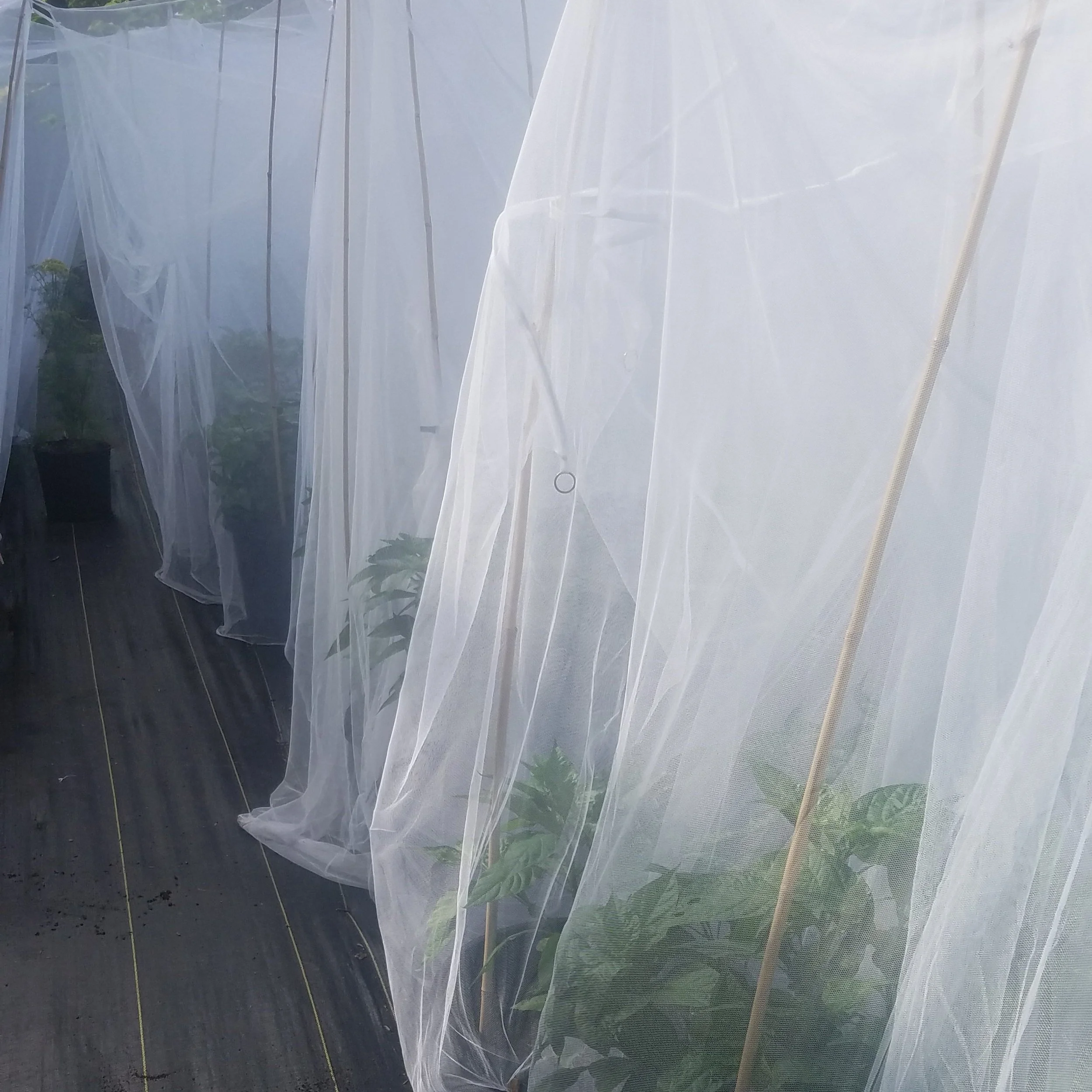
👈 That plant outside the netting is dill. We grow flowering plants nearby to provide insects with additional forage outside the pepper enclosure.


🧬 Why Isolation Matters
Growing multiple pepper varieties outdoors comes with challenges that aren’t always visible. We use netting and physical barriers to help isolate plants and reduce unwanted cross-pollination. This helps keep varieties distinct and increases the likelihood that seeds will produce plants similar to their parent line. However, nature is persistent. Some insects are small enough to pass through barriers, and over time, netting requires maintenance, repair, and replacement. Even with careful planning and consistent upkeep, there is no such thing as 100% guaranteed seed isolation outdoors. That level of control simply isn’t realistic in a natural environment. Growers use isolation methods to reduce unwanted cross-pollination and improve seed consistency. Pepper plants can cross-pollinate when insects transfer pollen between varieties, especially when multiple varieties are grown near one another.
Physical barriers such as fine-mesh netting, blossom bags, enclosed growing areas, spacing, and careful handling can greatly reduce unwanted pollen transfer. However, no practical outdoor growing system is completely immune to damaged netting, small insects, or human error. Isolation improves seed purity, but it does not guarantee complete uniformity, but no practical field system can guarantee 100% seed purity. That would take something closer to a laboratory than a field. And at that point, you have to ask: Is that still nature? Isolation reduces the risk but it doesn’t override the system itself. Life adapts. It spreads. It finds new paths forward. “Life finds a way.” — Dr. Ian Malcolm, Jurassic Park

🔬 Why Seeds Don’t Always Match
-
Pepper seeds don’t always grow true because each seed forms from a unique combination of genetic material. During reproduction, genes are recombined through a process called meiosis, which naturally creates variation.
-
Yes. Isolation reduces outside pollen, but it does not eliminate internal genetic variation within the plant. Each seed inside a single pepper pod is a genetic individual. Even seeds from the same pod can produce plants with different phenotypes.
What Open Pollinated Really Means
Open-pollinated describes the variety;
it does not, by itself, guarantee how the seed crop was isolated.
The term “open-pollinated” is commonly used in the seed world, but it is often misunderstood. Open-pollinated describes a variety that can reproduce through self-pollination or natural pollen movement between compatible plants while continuing to produce offspring that generally resemble the variety when it has been properly maintained. However, the term “open-pollinated” does not tell you how the seed crop was isolated. An open-pollinated variety may be grown under isolation to reduce pollen from other compatible varieties, or it may be grown without those protections. For that reason, seeing “open-pollinated” on a seed listing should not automatically be interpreted as a guarantee that the seed was isolated or protected from accidental cross-pollination. When an open-pollinated variety is carefully selected and maintained over multiple generations, its defining characteristics can remain relatively consistent. Some natural genetic variation may still occur, while unintended cross-pollination can introduce additional variation when outside pollen reaches the flowers.
🌿 Open-Pollinated
vs Hybrid Seeds
-
No. Open-pollinated refers to how plants reproduce naturally, while isolation refers to preventing outside pollen from affecting seed development.
-
Not always. Seeds saved from hybrid peppers (F1) often produce variable results in the next generation (F2), losing the uniform traits of the original plant.

🚫 Preventing Cross-Pollination
-
The most effective method is growing plants in a controlled, enclosed environment. Outdoors, growers use isolation methods like netting and spacing to reduce risk but not eliminate it.
-
No. There is no such thing as 100% guaranteed seed isolation when growing outdoors. Isolation methods reduce risk, but nature cannot be fully controlled.
-
There are many growers in the community doing their best with the resources they have, and passion for growing is what drives the entire seed world forward.
At the same time, we believe it’s important to be transparent about what different practices mean so growers of all kinds can make informed decisions about the seeds they choose and the results they can expect.
-
We don’t bully other growers or vendors to chase perfection but we embrace progress and clarity.
control and nature
consistency and variation
Every season is another step forward towards ideal traits we love while staying true to the natural process.


-
Open pollination isn’t inherently negative it’s simply how plants naturally reproduce. Understanding the difference between is key to understanding seed stock results.
open pollination
isolation
At Monster Peppers, we take additional steps to reduce unwanted cross pollination while still working within the natural environment. This helps improve consistency and preserve the traits that make each variety special, while still acknowledging that no outdoor growing system can offer absolute control.


-
Find a seed vendor you trust that got heart. Just also understand the reality behind the process.
Growing plants isn’t static.
It evolves, and nature cause changes.And sometimes the unexpected results are where the most interesting discoveries begin.


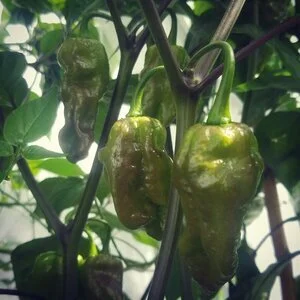
Creating Monster Peppers


How are they created?
When two peppers truly get along… things can heat up fast. Pollen from one parent fertilizes the ovules of another, creating seeds that carry genetic material from both parent plants. Grow those seeds, and the resulting offspring may express entirely new combinations of flavor, heat, color, texture, plant structure, and resilience.
Sometimes the results are expected, and sometimes they surprise you. That’s where things get interesting. A good cross can unlock entirely new combinations—bold heat, unexpected sweetness, thicker flesh, unusual colors, stronger plant structure, or better performance under challenging growing conditions. From there, each generation becomes a process of observation and refinement: selecting the plants that best express the traits you want and continuing those selections forward.
In a way, hybridization is the love story of the plant world two genetic backgrounds coming together to create something new. With enough generations of careful selection, that “new pepper” can eventually develop into a line that reproduces its defining traits with greater consistency.
PEPPER POLLINATION AND BREEDING CAN OCCUR NATURALLY OR THROUGH CONTROLLED BREEDING.
Natural Pollination (Open Pollination)
When pepper flowers are allowed to pollinate naturally, fertilization may occur through self-pollination or through pollen arriving from another compatible plant.
Self-Pollination – Pollen fertilizes a flower on the same plant. Peppers are primarily self-pollinating, so this commonly occurs without pollen from another plant.
Natural Cross-Pollination – Pollen from another compatible pepper plant fertilizes the flower. This commonly occurs when pollinators, such as bees, move pollen between plants.
Open pollination does not guarantee that only self-pollination occurred.
If compatible pepper varieties are grown near one another without adequate isolation, natural cross-pollination may still occur.
Controlled Breeding (Human-Mediated)
Controlled breeding occurs when a breeder deliberately manages which plants contribute pollen
and produce seed in order to combine, preserve, or introduce particular traits.
Controlled Cross-Pollination – Pollen from a selected parent plant is deliberately transferred to a selected recipient flower while unwanted pollen is excluded.
F1 Hybrid Breeding – Two selected parent lines are deliberately crossed to produce the first filial generation, or F1. When genetically consistent parent lines are used, the resulting F1 offspring can be highly uniform and predictable, although being an F1 alone does not automatically guarantee uniformity.
Backcrossing – Selected offspring are crossed back to one of the original parents, or a genetically similar recurrent parent, often to introduce or retain a desired trait while recovering more of that parent's genetic background.
Peppers are diploid plants, meaning their cells carry two sets of ♂chromosomes♀, with genetic material inherited through both parents. Chili peppers are also largely self-pollinating and self-fertile, so a plant that pollinates itself will often produce offspring that closely resemble the parent variety, especially when the line is already genetically stable and unwanted cross-pollination is limited. However, when pollen from a different compatible plant fertilizes a flower, genetic material from both parents is combined in the resulting seeds. Those seeds can produce offspring with new combinations of traits such as pod shape, size, color, heat level, flavor, or plant structure. When creating intentional crosses, especially controlled hybrids, knowing and controlling the source of pollen is critical. If unintended pollen reaches the flower first, it can interfere with the intended pairing and make the resulting offspring less predictable. That’s why isolation matters. By reducing unwanted pollen transfer, breeders can maintain better control over parentage and produce more predictable, repeatable breeding results.
-
Creating Monster Peppers takes time, patience, and consistent selection.
Hybrid-derived pepper lines typically require multiple generations of growing, self-pollination, and selection before they become stable enough to reproduce their defining traits with reliable consistency. Many breeders continue evaluating lines through approximately F7–F10 or beyond, although generation number alone does not guarantee stability.
If you save seeds from a first-generation hybrid (F1) and grow them, the resulting F2 generation may show considerable variation as traits inherited from the original parent lines begin to segregate into different combinations. From there, breeders grow, observe, and select plants generation after generation for characteristics such as size, heat, flavor, color, shape, plant structure, and performance.
Over time, careful selection can gradually make those traits more consistent until the line begins reproducing its defining characteristics reliably.
-
Take two distinct varieties:
Devil Brain
7 Pot Bubble Gum
When pollen from one parent successfully fertilizes the other, the resulting seeds carry genetic material from both varieties.
Grow those seeds, and you get the first hybrid generation of a new cross.
We call it Devil Gum.
This new pod carries traits from both parents. You might see the texture from one, the color from another, or a blend of heat and structure from both.
-
From that point forward, the process becomes one of continued growing, observation, and selection.
By selecting plants that display desirable traits and growing those selections generation after generation, you begin to guide the direction of the line.
With each generation:
unwanted traits are gradually filtered out
desired traits become more consistent
uniformity can increase over time
This process doesn’t happen overnight.
But with persistence and careful selection, the line can become more stable and recognizable with each passing generation.
Devil Brain (parent)

7 Pot Bubblegum (parent)


Devil Gum (seedling)

Devil Gum F1

Devil Gum F1
Crosses vs Hybrids vs heirloom in Peppers
Understanding the Differences Between the Three Types of Plant Breeding
A cross occurs when two different pepper plants are bred together whether from the same species or different ones.
What matters most is stability. If the resulting plants retain their traits over multiple generations, the variety becomes stable. If not, further selection is needed to refine it. Not all crosses are controlled, and many occur naturally without predictability, often introducing variation that doesn’t meet the standards of a true hybrid.
A hybrid—specifically an F1 hybrid—is a carefully controlled cross designed to produce uniform traits.
This is done by deliberately selecting two genetically distinct parent plants with desirable characteristics, such as higher yields, improved disease resistance, or specific flavors.
The result is a first-generation (F1) plant that reliably expresses those traits.
However, hybrids don’t always “breed true”. If seeds are saved and replanted, the next generation (F2) may show noticeable variation and not consistently resemble the parent plant.
Every hybrid is a cross—but not every cross is a hybrid.
The difference comes down to control and intent. In commercial breeding, hybrids are created to produce consistent, predictable results that can be repeated across plantings.
In contrast, crosses that occur naturally or without strict selection often result in more variable and less predictable outcomes.
Types of Crosses
Crosses Within the Same Species (Intraspecific Crosses)
Example: Trinidad Moruga Scorpion × 7 Pot Douglah (Capsicum “chinense”)
Typically easier to stabilize since both parents share similar genetics.
Offspring can be refined over multiple generations to develop a consistent variety.
Crosses Between Different Species (Interspecific Crosses)
Example: Ghost Pepper (Capsicum “chinense”) × Thai Pepper (Capsicum annuum)
More challenging to stabilize due to genetic incompatibilities.
Offspring may display sterility, weak growth, or unpredictable traits.
Open-Pollinated Varieties & Heirlooms
Open-pollinated (OP) varieties reproduce through self-pollination or natural pollen movement between compatible plants rather than through a specific controlled parent-to-parent cross. Growers can still isolate, select, and maintain an open-pollinated variety while allowing it to reproduce naturally within its own population.
When an OP variety has been grown and selected over multiple generations, its defining traits can remain highly consistent from one generation to the next, especially when unwanted cross-pollination is limited. As with any biological seed production, absolute uniformity cannot be guaranteed, but a well-maintained stable variety should reproduce true-to-type with a high degree of consistency. True to seed, or true-to-type, simply means a plant grows and produces peppers that closely match the defining characteristics of the original variety—such as shape, size, color, flavor, heat level, and plant structure. When a plant does not grow true-to-type, it may express noticeable differences from what was expected.
Think of it like family resemblance rather than cloning. The plants should remain recognizable as the same variety, even though small differences can still occur.
At Monster Peppers, we don’t rely on chance alone.
We use isolation methods to reduce unwanted crossing and multi-generation selection to improve consistency while preserving the traits that define each variety. While no practical outdoor system can guarantee absolute genetic purity, these practices greatly improve the likelihood that a line will remain consistent from one generation to the next. That means you’re not just getting seeds—you’re getting a line that has been grown, observed, selected, and actively maintained over time.
It’s worth noting that not all open-pollinated varieties are heirlooms. Heirlooms are the special old timers the varieties passed down through generations because of their history, cultural significance, distinctive traits, flavor, appearance, or traditional use. And just so we’re on the same page, we don’t heirloom shame here! Heirloom peppers basically the VIPs of the OP world are often prized for their unique flavors, unusual appearances, rich histories, and traditional culinary uses. Because established heirlooms are generally maintained as open-pollinated varieties, growers can save their seeds and continue preserving the line when proper isolation and selection practices are used.
Open-pollinated varieties also give growers the freedom to save seed and continue shaping a line over generations. Depending on the variety and how it has been maintained, some OP populations may contain more genetic variation than others, while some can be remarkably uniform and consistent. Commercial F1 hybrids may have advantages when breeders specifically develop them for characteristics such as uniform yield, disease resistance, fruit size, or harvest timing. Open-pollinated and heirloom varieties offer a different advantage: growers can save seed, continue selecting from the population, and maintain or refine the variety without having to recreate the original F1 cross.
Growing conditions can still influence how any variety performs from season to season. Soil, temperature, sunlight, water, and other environmental factors can affect how inherited traits are expressed, even when the underlying genetics remain the same. That also gives growers an opportunity to develop locally adapted lines by repeatedly selecting plants that perform well under their particular growing conditions. So if you want peppers with history, character, and traits worth carrying forward, heirlooms and other open-pollinated varieties have plenty to offer. Keep selecting long enough, and maybe one day you’re the one making history.
Choosing Between Hybrids, Crosses, and Heirlooms
Ultimately, the right choice depends on what the grower values most:
If consistency, predictable performance, or specific production traits are priorities—such as in commercial farming—well-developed F1 hybrids can be an excellent choice.
If long-term seed saving, preserving established varieties, traditional characteristics, heirlooms and other open-pollinated varieties offer important advantages.
If the goal is breeding something new, controlled crosses provide the genetic starting point for developing new hybrids or, through multiple generations of selection and stabilization, new open-pollinated varieties.
Monster Peppers Selective Phenotypes And Genotypes
What are Environment + Phenotypes + Genotypes + Mutations?
Some of the most exotic peppers come from different environments around the world and that’s not by accident. The environment plays a major role in shaping a plant’s phenotype, which ultimately determines the physical traits of the pepper pod. Some pods grow smooth, while others develop spikes, ridges, or unique textures. A plant’s phenotype is influenced by both its genotype (its genetic makeup) and the conditions it experiences throughout its life. This is often described as “nature and nurture”:
Nature → the genetic code the plant carries
Nurture → the environment it grows in
🌎Environment is the circumstances, objects, or conditions by which one is surrounded. Environment includes all external conditions surrounding a plant such as temperature, soil quality, water, light, and stress factors. These physical, chemical, and biological influences directly affect how a plant grows, develops, and survives.
🌱Phenotype is what you can observe. This includes: plant height, pod shape and color, texture and structure, growth behavior, overall health and stress response, Some traits are obvious, while others show up over time. Does the plant grow rapidly, or slow down after transplanting? Does it handle stress well, or struggle with changes? Even subtle behaviors like these are part of a plant’s phenotype.
🧬Genotype is the plant’s genetic blueprint. It contains all the information that determines how traits can develop, even if they don’t always show up the same way. Two plants may look very similar on the outside (similar phenotypes), but still carry different underlying genotypes. That hidden variation is what allows new traits to appear over time.
⚡ Mutation is a change in a plant’s genetic code. Most mutations go unnoticed but occasionally, they create something entirely new. A different shape, a new color, or a unique growth pattern. Sometimes they fade out. Other times, they become the start of a new variety. Mutations occurs when DNA is damaged or changed in such a way as to alter the genetic message carried by that gene. Mutations result from errors during DNA replication, mitosis, and meiosis, or other types of damage during error-prone repair or cause an error during other forms of repair or during translesion synthesis. Mutations may also result from insertion or deletion of segments of DNA due to mobile genetic elements. Mutations may or may not produce discernible changes in the observable characteristics (phenotype) of an organism. Mutations play a part in both normal and abnormal biological processes including: evolution.
Contorted Coco
Why Use Hybrids?
The primary advantage of well-developed F1 hybrids is their predictability and uniform performance. Because these hybrids are developed through controlled breeding, parent lines can be selected for traits such as fruit size, yield, disease resistance, heat level, flavor, or plant structure. This is particularly valuable for commercial growers who need consistent harvests and predictable crop performance.
However, not all hybrids are the same.
F1 hybrids (first-generation hybrids) may express hybrid vigor, or heterosis, where the offspring outperform their parents in particular traits such as growth, yield, or overall performance. The amount of hybrid vigor depends on the specific parental combination. Disease resistance may also be deliberately introduced through breeding, but it is not something every F1 automatically gains.
If you save seeds from an F1 hybrid, the F2 generation may show considerably greater variation and may not consistently resemble the F1. This occurs as genes inherited from the original parent lines segregate and recombine into different combinations in the F2 generation.
Because of this, growers seeking the same characteristics generally purchase new F1 seed produced from the original parent lines rather than relying on seed saved from the F1 harvest. Some breeders instead continue selecting plants from the F2 generation and beyond, gradually working toward a stable, open-pollinated variety.
For growers looking to sell uniform produce at farmers' markets or larger commercial markets, well-developed hybrids can be an excellent choice because of their predictability. This doesn’t make hybrids inherently “better”—it simply makes them useful for particular growing goals.
Hybrid-derived lines do not necessarily remain unstable forever. Through repeated self-pollination and selection, a line may become increasingly homozygous and consistent over successive generations.
Some traits may appear stable by approximately F5, while many breeders continue through F7–F10 or beyond. Generation number alone does not prove that a line is stable. Breeders should confirm that its defining traits reproduce consistently across multiple plants, grow-outs, seasons, and preferably more than one set of environmental conditions. Once it reliably breeds true, it can be maintained as a stable open-pollinated variety. Stability isn’t instant—it’s earned over generations.


The Contorted Coco originally was a mutation from the Peach Bhut pepper (cultivated by Kevin Bane) and the rarity of this line almost went into extinction. Then comes along Monster Peppers. We brought it back into the spotlight. Its main phenotype is its consistent, twisted shapes and contorted form with dark and bright hues of chocolate. However, despite this pod’s current display, its origins can be traced back to ancestors that share no physical similarities on the surface level.
-
At Monster Peppers, we develop pepper lines through selective breeding by choosing healthy plants that best express the traits we want to preserve and carrying those traits forward through carefully collected seed.
Genetics provide the foundation, but environmental conditions influence how inherited traits are expressed. Temperature, soil, moisture, sunlight, and other growing conditions can affect plant growth, productivity, heat, flavor, and pod appearance. Seeds from the same pod are closely related but may not be genetically identical, so differences between plants can result from both genetic variation and environmental influences.
This interaction between genetics and environment is part of what makes pepper breeding so fascinating. It allows us to evaluate which traits are truly heritable and which are strongly influenced by growing conditions.
Through repeated selection and testing across multiple generations and environments, we work to develop lines that consistently express their defining traits while also performing reliably under a range of growing conditions.

Mustard Dessert Beetle


Not every inherited trait is expressed in the same way under every growing condition. A plant’s genotype contains its inherited genetic information, while its phenotype is the observable result of how that genotype interacts with the environment. The Mustard Dessert Beetle can begin with dark-green pigmentation. Areas exposed to strong, direct sunlight may shift toward a bright mustard-yellow color, while shaded areas may remain greener as the pod matures. When only one side receives direct sunlight, the same pepper may display both colors. The plant’s genetics give it the ability to produce this light-responsive color pattern, while the amount and location of sunlight influence how the trait appears. This helps explain why the same pepper variety may look different when grown by different growers or under different environmental conditions. Environmental conditions can change how a plant expresses its existing genetics, but they do not automatically create inherited genetic changes. Adaptation develops across generations when plants with heritable traits suited to an environment are repeatedly selected and reproduced.
Vampire Pepper


-
We prioritize hand-selecting seeds from healthy plants whose peppers closely match the variety’s expected traits, including pod shape, color, size, heat level, flavor, productivity, and overall plant structure.
Even with careful selection, some variation may still occur. Each seed forms when an ovule is fertilized by a pollen grain. In a stable, self-pollinated variety, the resulting seedlings should generally remain similar to the parent plant. More noticeable variation may occur when a breeding line still contains hidden genetic diversity, when unintended cross-pollination occurs, or when environmental conditions influence how inherited traits are expressed.
Without proper isolation, pollen carried by insects can move between nearby pepper varieties. Over multiple generations, unintended crossing may result in:
unexpected phenotypes
changes in pod color, shape, or texture
variation in heat, flavor, size, or productivity
plants that no longer closely match the original variety
This is why isolation practices, such as fine-mesh netting and careful seed handling, are important. They reduce the chance of unwanted pollen entering the breeding population and help preserve consistency across generations.
Growing many pepper varieties close together increases the chance of unintended crosses. While an accidental cross can sometimes produce an interesting new plant, it can also make maintaining an established variety more difficult.
When an unusual but desirable plant appears, we observe it carefully and save its seeds separately. It may then be grown, selected, and evaluated over several generations to determine whether its traits are heritable and can become stable.
For growers seeking dependable results—especially those planting at a larger scale—strong isolation, accurate labeling, careful selection, and ongoing seed-quality control are essential.

🧛♂️ Variation Within a Single Pod
These Vampire Peppers were produced by different plants grown from seeds collected from the same original pod. Although the plants are closely related, their noticeably different appearances show that the parent line still contained genetic variation that separated and expressed itself in the next generation. Each seed is an individual offspring. When a parent plant contains different versions of certain genes, meiosis can reshuffle those genes into new combinations before the seeds form. This can cause sibling plants from the same pod to differ in color, shape, heat, growth habit, productivity, or other traits. However, seeds from a highly stable, self-pollinated line can be genetically very similar and should usually produce plants that closely match the variety. Strong variation may indicate that the line is still segregating, that accidental cross-pollination occurred, that a mutation appeared, or that different growing conditions influenced how the plants expressed their genetics. Isolation reduces the introduction of unwanted outside pollen, but it cannot remove genetic variation already present within an unstable breeding line. In this case, the variation among the Vampire Pepper plants shows that further selection and stabilization are still needed.


🧬 How We Approach It at Monster Peppers 🌱
When we grow peppers, we are not simply producing seeds, we are evaluating plants and shaping future generations.
We grow multiple plants from each line and observe how they perform under real growing conditions.
Differences in temperature, moisture, disease pressure, and other environmental factors help us evaluate how consistently each plant expresses its inherited traits.
We select parent plants based on characteristics such as:
strong, healthy plant structure
resilience and reliable growth
desirable flavor and heat
consistent pod shape, color, and texture
distinctive foliage or ornamental traits
productivity and overall plant performance
At harvest, seeds from selected plants are collected and kept separate whenever possible. This allows us to track which parent produced each seed lot and compare its offspring in the next generation. The seeds are then cleaned and inspected. Immature, damaged, discolored, or poorly developed seeds are removed. However, seed size or appearance alone cannot reliably predict the traits of the plant it will produce. Our most important selections are therefore based on the performance and characteristics of the parent plant and its peppers, not simply on how individual seeds look. We choose quality over quantity, preserving seed only from plants that best represent the direction of the line. Then we grow the next generation, evaluate it again, and continue the cycle.


🔥 Raising the Bar — Shaping the Line
Consistency isn’t found—it’s built over generations.
With each grow-out, we evaluate the Vampire Pepper population and save seeds only from the healthiest plants that most closely express the traits we want to preserve, including:
strong plant structure
consistent pod shape, color, and appearance
distinctive ornamental foliage
reliable growth and productivity
Because the Vampire Pepper is still being developed, some variation may appear between plants. Desirable differences can reveal new trait combinations, but only traits that reproduce consistently across later generations become part of the established line. Each generation brings the population closer to a recognizable and dependable variety. Stabilizing a pepper is a gradual process of growing, observing, selecting, and testing—season after season—until its defining characteristics reliably carry forward through seed. Growing peppers is a living craft one you shape season after season through the seeds you save and the traits you choose to carry forward.